An aromatic plant is a plant that produces chemicals through specialized glands. These chemicals are known as "volatile oils". Although most plants make volatile oils in their flowers to attract pollinators, aromatic plants also make volatile oils in independent glands positioned on the leaves and stem.
Aromatic plants have been used since antiquity for many purposes: aromatic, antifungal, bactericide, antibiotic, insect repeller, animal repeller, natural deodorizer, natural preservative - these are only a few uses. The most active part of aromatic plants resides in volatile oils, tannins, flavonoids, anthocyanins, amino acids and vitamins. Aromatic plants were the majority of the "drugs" in the past. People that ate regularly aromatic plants were less prone to viruses, cancers, infections and all sorts of diseases. Modern medicine just recently started to look at the beneficial effects of the chemicals in plants. More and more researchers see that volatile oils and other chemicals found in plants act synergistically with other drugs. As an example, some doctors started to administer volatile oils(from Salvia lavandulifolia) and just half of a "regular drug" dose to patients suffering of diabetes with good results. Experiments on mice and rats showed that volatile oils lowered the upper limit of insulin produced after a meal, even in small doses. Also, the cells became more sensitive to insulin when blood sugar was at elevated levels. More and more experiments are being made using plants and their beneficial role in diseases and on the immune system. The theoretical drawback is that, with plants, more doesn't mean better. In high doses, plants can do more harm than good. Even in very low doses, volatile oils can harm the body, so do not ingest volatile oils in their pure form.
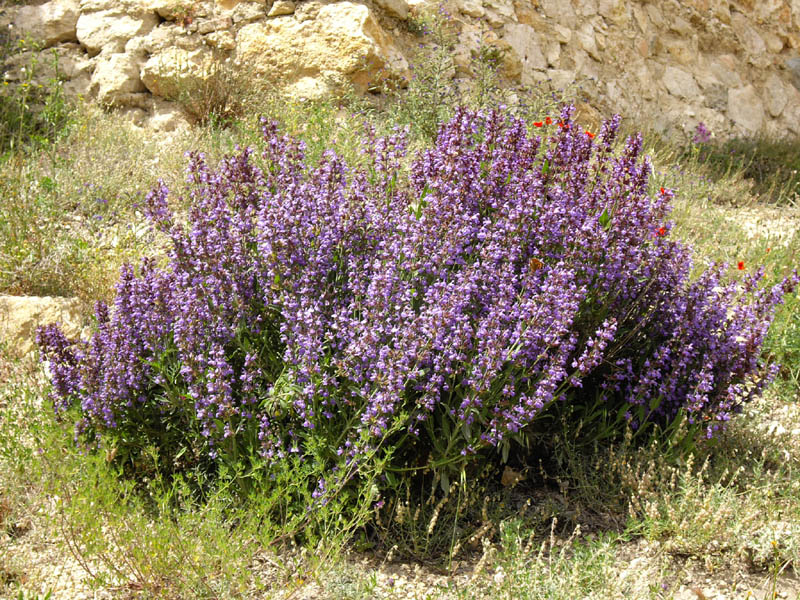
Salvia lavandulifolia in the wilderness

No comments:
Post a Comment